October 15, 2026
The AI Trust Gap Is Real: What Amazon's NDA Reversal Tells Small Businesses About Transparency and Tech
Imagine your local government signing a nondisclosure agreement with one of the world's largest corporations before your neighborhood even knew a project was being considered. That is exactly the…
The AI Trust Gap Is Real: What Amazon's NDA Reversal Tells Small Businesses About Transparency and Tech
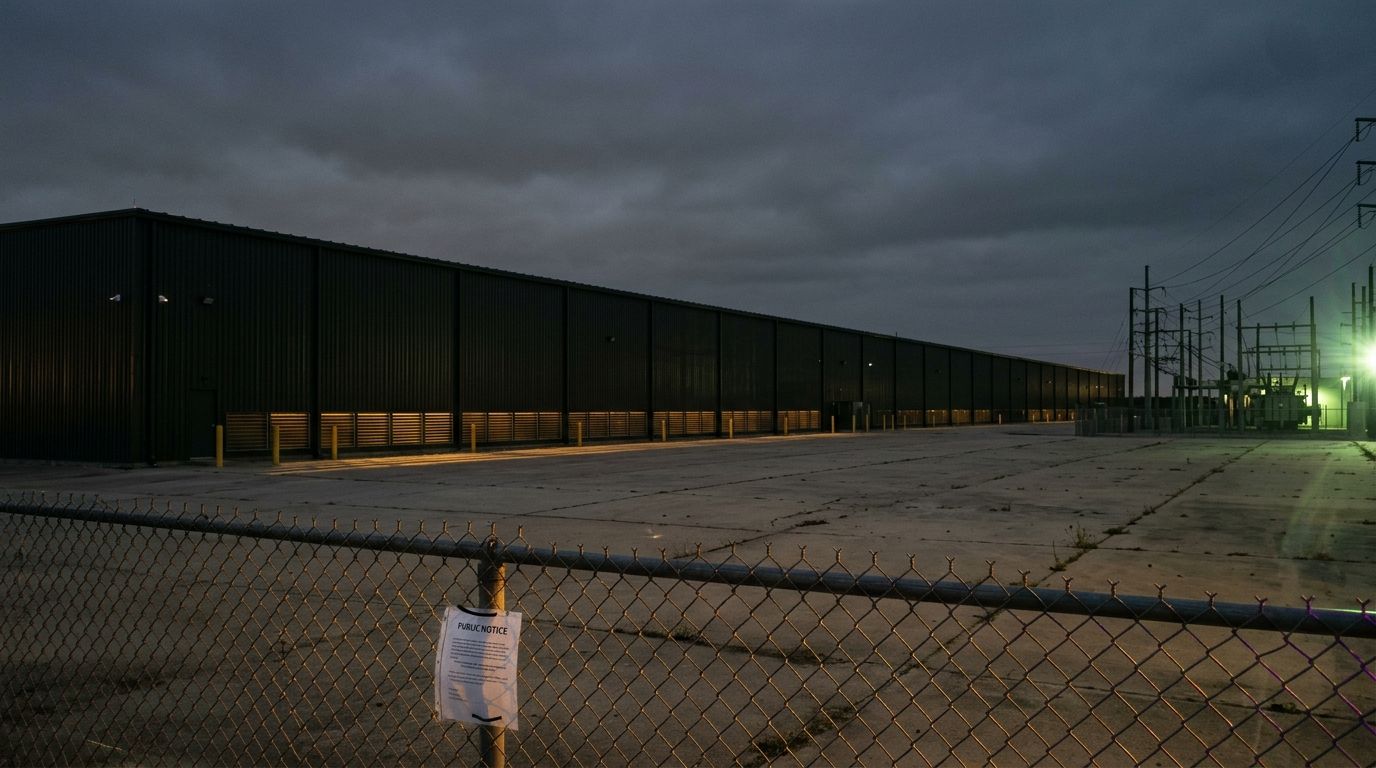
Imagine your local government signing a nondisclosure agreement with one of the world's largest corporations before your neighborhood even knew a project was being considered. That is exactly the pattern environmental activist Erin Brockovich described as the number one complaint she has heard about AI data center expansion: projects announced after permits are already secured, developers who do not return calls, and local officials who signed NDAs before their neighbors knew anything was happening. Now Amazon is trying to change that narrative, and the implications ripple far beyond the communities sitting next to server farms.
Amazon Web Services CEO Matt Garman published a blog post in early October 2026 addressing the growing wave of public opposition to AI data centers, and the headline policy shift buried inside it is significant: Amazon says it no longer uses nondisclosure agreements with government agencies when seeking approval to build new data centers. The announcement came as context Garman was trying to reframe, noting that more than 100 data center moratoriums are currently being considered across the United States. New York State had already enacted a one-year moratorium on permits for large data centers, a concrete sign that community frustration has reached a legislative tipping point. Garman warned bluntly that if these measures are enacted broadly, "the U.S. could be writing its own losing ticket to this race, and the consequences would last generations."
Garman also took aim at what he called four big myths about data centers: that they consume too much water, that they drive up electricity costs, that they are major polluters, and that they offer no community benefits. On water, he cited an Amazon report claiming that direct data center water consumption accounts for just 0.5% of all industrial water usage in the United States, calling it "orders of magnitude less than golf courses, almond farming, and many other industries." On electricity rates, he argued that price increases in some states with heavy data center concentrations are primarily caused by old, under-invested grid infrastructure rather than data center demand itself. However, an independent watchdog had recently attributed a 76% year-over-year price increase on America's largest electrical grid directly to data centers, a figure that stands in sharp contrast to Garman's framing. Alongside the NDA pledge, Garman noted that Amazon has contributed more than $1 billion to communities across the U.S. where it has a meaningful data center presence over the past three years.
For small and mid-size business owners, the broader lesson here has nothing to do with data centers and everything to do with trust. Anthropic CEO Dario Amodei recently framed the AI backlash as "fundamentally a crisis of trust," where communities and customers assume that powerful institutions are always "cooking up some new way to screw them over." Writer Jasmine Sun observed that when data center opponents are presented with tech companies' counter-arguments, the most common response is simply, "I don't believe them." That dynamic plays out at every level of business. When your customers feel like they are being managed rather than informed, the gap between what you say and what they believe grows wider, no matter how accurate your data is.
This matters for how you position AI in your own business. If you are adopting AI tools, AI-powered chat, or automated marketing, your customers are watching. They are already primed by headlines about NDAs, secrecy, and opacity from the largest players in tech. The businesses that will win long-term trust are not the ones with the best AI, but the ones who are most transparent about how they use it. Being clear about what AI does in your business, what data it touches, and how it benefits the customer is not just ethical practice. It is a competitive advantage in a market where "I don't believe them" is becoming a reflexive response to anything AI-related.
There is also a practical regulatory signal here for any business that depends on cloud infrastructure, digital advertising platforms, or AI services powered by large data centers. With over 100 moratoriums under consideration nationwide and New York already pulling the brake, the availability and cost of AI compute is not a static assumption. Energy price volatility, infrastructure constraints, and public policy shifts are now active variables in the AI services landscape. Building your marketing and operations strategy on the assumption that current AI tool pricing and availability will remain stable may be optimistic.
This week, add one sentence of plain-language transparency to any AI-powered touchpoint in your business. If you use an AI chatbot on your website, add a visible label that says what it is and what it can help with. If you use AI to generate email campaigns or social content, consider disclosing that in your communications. Small, proactive transparency moves cost you almost nothing and position your brand as trustworthy in a market where the largest tech companies are still being asked to earn that credibility.
The AI trust gap is not a PR problem for Amazon alone. It is a daily opportunity for smaller businesses to differentiate by doing the thing the big players are only now being pressured to do: communicate openly, early, and without NDAs.
Originally inspired by: Amazon responds to data center backlash, says it no longer uses NDAs (https://techcrunch.com/2026/10/03/amazon-responds-to-data-center-backlash-says-it-no-longer-uses-ndas/) See how Leads to Conversion can help your business build AI-powered marketing that customers actually trust. Get your free AI audit
Your turn
What is your traffic actually doing?
Send us your details and we will come back with a short, specific read on what your traffic, your pages and your pipeline are doing today — and the first three things we would change. A real person reads every submission, and you get the read whether or not we ever work together.