July 9, 2026
Top-Tier AI Performance at One-Third the Price: What GPT-5.6 Sol Means for Your Business Budget
What if you could get nearly the same results from a premium AI tool for 67% less money? That is not a hypothetical anymore. OpenAI's newly released GPT-5.6 Sol is doing exactly that, and the ripple…
Top-Tier AI Performance at One-Third the Price: What GPT-5.6 Sol Means for Your Business Budget
What if you could get nearly the same results from a premium AI tool for 67% less money? That is not a hypothetical anymore. OpenAI's newly released GPT-5.6 Sol is doing exactly that, and the ripple effects for small and mid-size business owners who rely on AI tools could be significant.
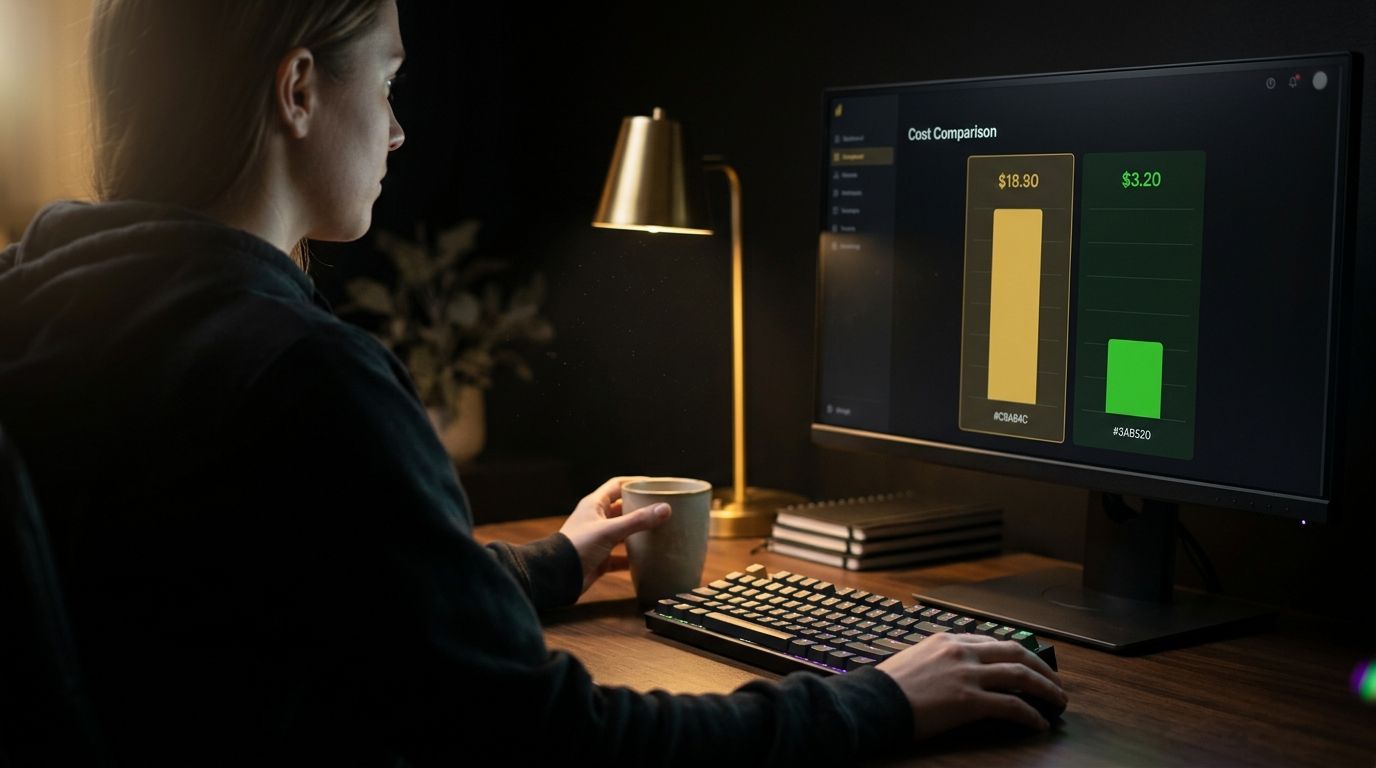
According to independent AI evaluation platform Artificial Analysis, GPT-5.6 Sol scores 59 points on the Artificial Analysis Intelligence Index, landing just one point behind Anthropic's Claude Fable 5, which scores 60. That single-point gap in benchmark performance is almost negligible in real-world usage. What is far from negligible is the price difference: Sol costs $1.04 per task, while Claude Fable 5 costs $2.75 per task. That makes Sol roughly one-third the cost for near-identical aggregate intelligence output. OpenAI CEO Sam Altman has also noted that Sol burns up to 54% fewer output tokens than competing models at similar performance levels on agentic coding tasks, meaning cost advantages compound the more you use it.
Sol does not just compete on price. In Artificial Analysis's new Coding Agent Index, GPT-5.6 Sol running inside OpenAI's Codex environment scores 80 points, taking the top position ahead of Claude Fable 5 in Claude Code (77 points) and GPT-5.6 Terra (77 points). On the AA-Briefcase benchmark, which evaluates AI performance on realistic office tasks, Sol earns the highest "Presentation Elo" score of all models tested. OpenAI has also introduced a cache-write fee structure for the first time with this release, pushing effective prices down further. Token pricing for Sol sits at $5 per million input tokens and $30 per million output tokens, with a 90% discount on cache reads. The smaller variants in the 5.6 family, Terra and Luna, go even lower at $2.50/$15 and $1/$6 respectively. Anthropic is now being squeezed not only by OpenAI but by Chinese open-source models, Meta's Muse 1.1, and xAI's Grok 4.5, all of which are applying downward pressure on AI pricing across the industry.
For business owners currently using AI tools to power marketing copy, customer communications, workflow automation, or content production, this pricing shift is directly relevant. Many small businesses have been priced out of the most capable AI models, forced to choose between lower-quality outputs and higher operating costs. The arrival of a model that scores nearly identically to the current top benchmark leader at one-third the price changes that calculation. You no longer have to compromise on capability to stay within a reasonable budget.
If you are running AI-assisted workflows, whether that means generating ad copy, drafting email sequences, building internal automations, or using agentic tools to handle repetitive tasks, the model you use underneath those workflows matters. A switch from a top-tier but expensive model to GPT-5.6 Sol could deliver comparable results while meaningfully cutting your per-task AI spend. For a small business running hundreds or thousands of AI-assisted tasks each month, those savings add up quickly.
The broader pricing war playing out across the AI industry is also worth watching. As OpenAI, Anthropic, Meta, xAI, and Chinese open-source labs all compete on cost, the floor for capable AI keeps dropping. Business owners who locked into specific tools or pricing structures a year ago may be significantly overpaying today. The market is rewarding flexibility.
This week, log in to whatever AI platform you use most for business tasks and look at your actual usage data. Calculate an estimated cost per task or per output, then compare it against GPT-5.6 Sol's published pricing of $1.04 per task. If you are using an agent-based workflow or coding assistant, the gap may be even larger given Sol's lead in the Coding Agent Index. You do not need to switch everything immediately, but knowing where you stand gives you real leverage.
AI model pricing is no longer a fixed cost you accept. It is a competitive variable, and the businesses that treat it that way will have a meaningful advantage.
Originally inspired by: GPT-5.6 Sol nearly matches Fable 5 on aggregated benchmarks at one-third the cost (https://the-decoder.com/gpt-5-6-sol-nearly-matches-fable-5-on-aggregated-benchmarks-at-one-third-the-cost/) See how Leads to Conversion can help you cut AI costs without cutting results. Talk to a strategist
Your turn
What is your traffic actually doing?
Send us your details and we will come back with a short, specific read on what your traffic, your pages and your pipeline are doing today — and the first three things we would change. A real person reads every submission, and you get the read whether or not we ever work together.