August 4, 2026
The U.S. Just Banned Foreign Robots — And It Tells You Everything About Where AI Policy Is Heading
The Federal Trade Commission just did something that would have seemed like science fiction two years ago: it banned foreign-made robots from the United States. Not a tariff. Not a subsidy. A ban. If…
The U.S. Just Banned Foreign Robots — And It Tells You Everything About Where AI Policy Is Heading
The Federal Trade Commission just did something that would have seemed like science fiction two years ago: it banned foreign-made robots from the United States. Not a tariff. Not a subsidy. A ban. If you think that only matters to tech giants and university labs, think again — the same protectionist logic is quietly circling the AI tools your business runs on right now.
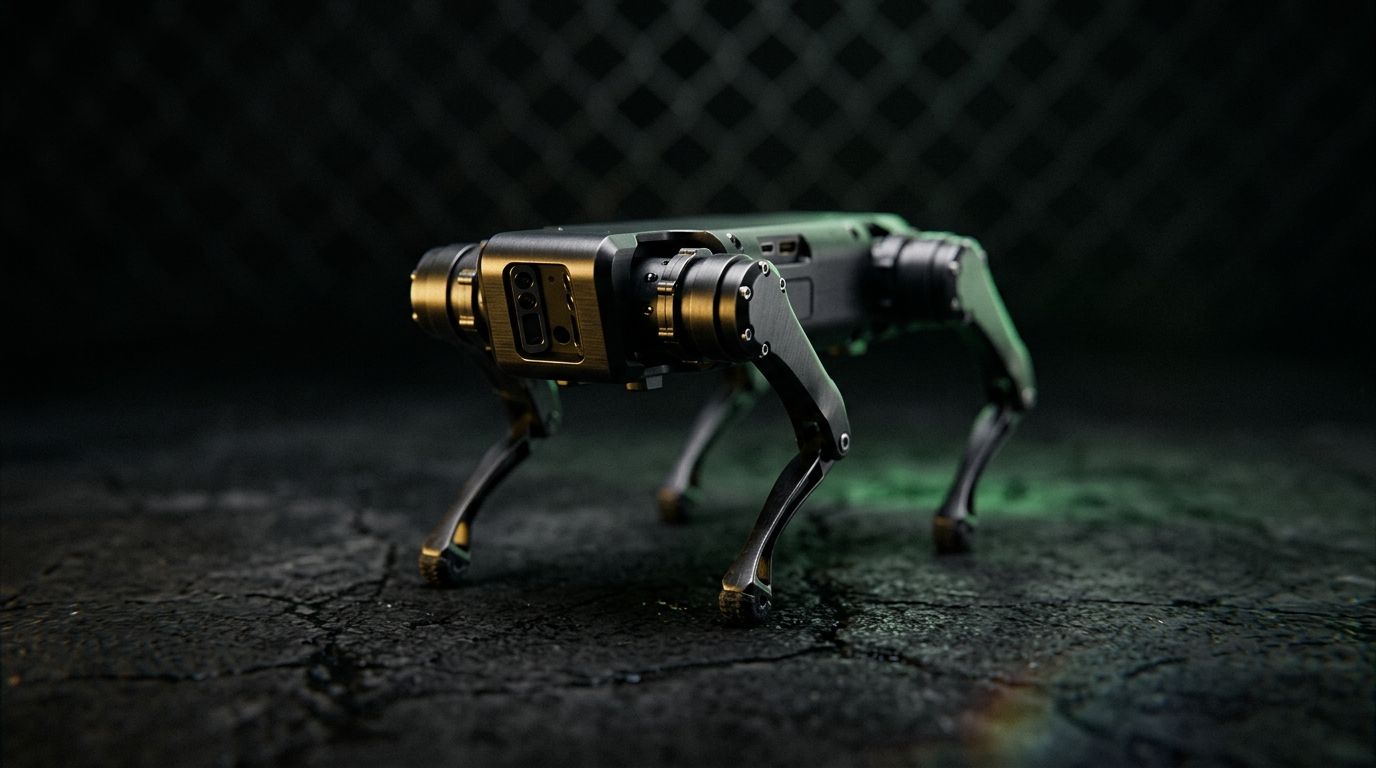
In late July 2026, the FTC issued a sweeping prohibition on imports of advanced foreign-made robots, covering humanoids, quadrupeds, and wheeled robots. The ruling, reported by MIT Technology Review's James O'Donnell, cites two official justifications: national security concerns over data collection by foreign robots in homes and sensitive facilities, and the need to build a more robust domestic supply chain by shielding U.S. robotics companies from Chinese competition. The FTC even cited a specific incident in which one person was able to remotely gain control of 7,000 robot vacuum cleaners to underscore the cybersecurity argument. Gavin Kenneally, CEO of Ghost Robotics, a U.S. company that makes four-legged inspection robots, stated that the cybersecurity risks from foreign-made robots are real and that stronger protections could benefit both customers and the industry.
The price reality behind this ban reveals just how steep the trade-offs are. A four-legged robot from China's Unitree costs approximately $4,600. A comparable robot from Boston Dynamics runs as high as $278,000. According to Aaron Prather, director of market intelligence for the Association for Advancing Automation, 90% of recent robotics research papers from U.S. universities relied on robots made by Unitree. Unitree itself is preparing to go public at a valuation targeting nearly $6 billion. Meanwhile, U.S. competitors like Figure and 1X are not yet shipping robots at meaningful scale. The administration is also reportedly considering a ban on open-source Chinese AI models that rival OpenAI and Anthropic products at far lower cost — a move that MIT Sloan researchers estimate could block U.S. businesses from realizing an estimated $25 billion in annual savings.
For small and mid-size business owners, this is not background noise. It is a preview of the operating environment you will navigate for the next several years. The U.S. government is now treating the entire AI industry, including robotics, as a strategic asset worth protecting through industrial policy. That means the tools, platforms, and models available to you will increasingly be shaped not just by innovation, but by geopolitics. If you have been evaluating lower-cost AI tools with roots in Chinese development, expect regulatory uncertainty to grow around those options. Your planning horizon for tech stack decisions just got shorter.
There is also a supply chain signal worth absorbing here. The FTC's move mirrors the playbook the U.S. has already run with solar panels, electric vehicles, and drones: when China gets good at delivering a cheaper version of a strategic technology, Washington responds. AI is now firmly in that category. For business owners who rely on operations, fulfillment, or any form of physical automation, the cost of domestic alternatives is likely to climb before it falls. Teams planning capital expenditures or technology investments in the next 12 to 18 months should factor policy risk into those decisions in a way that was not necessary even a year ago.
What this ultimately means for your marketing and customer communication strategy is more nuanced but just as important. As AI tools face increasing regulatory scrutiny and potential restrictions, the businesses that will win are the ones that have already built durable, diversified AI workflows rather than betting everything on a single platform or model. The companies citing Chinese open-source models as cost-saving solutions today may find themselves scrambling for alternatives if proposed bans move forward. This is the moment to stress-test your AI stack for resilience, not just cost efficiency.
This week, take a concrete step: identify every AI tool or platform your business currently uses and note whether any of them are built on or powered by models with uncertain regulatory status. You do not need to switch anything immediately, but knowing your exposure is the foundation of a smarter contingency plan. Check the company's country of ownership, model provenance, and whether a domestic or policy-stable alternative exists. It takes less than an hour and gives you real decision-making power before regulators force the issue.
The AI landscape is not just moving fast technically — it is moving fast politically. The businesses that stay ahead will be the ones treating AI strategy as inseparable from business strategy.
Originally inspired by: Trump's AI protectionism has come for robotics (https://www.technologyreview.com/2026/08/03/1141056/trumps-ai-protectionism-has-come-for-robotics/) See how Leads to Conversion can help you build a resilient, future-proof AI marketing strategy. Talk to a strategist
Your turn
What is your traffic actually doing?
Send us your details and we will come back with a short, specific read on what your traffic, your pages and your pipeline are doing today — and the first three things we would change. A real person reads every submission, and you get the read whether or not we ever work together.