June 28, 2026
AI Is Rewriting the Rules of Digital Payments — And Your Business Needs to Pay Attention
What does it take to reach one billion daily payment transactions? According to the head of India's National Payments Corporation of India (NPCI), the answer is artificial intelligence applied at ever
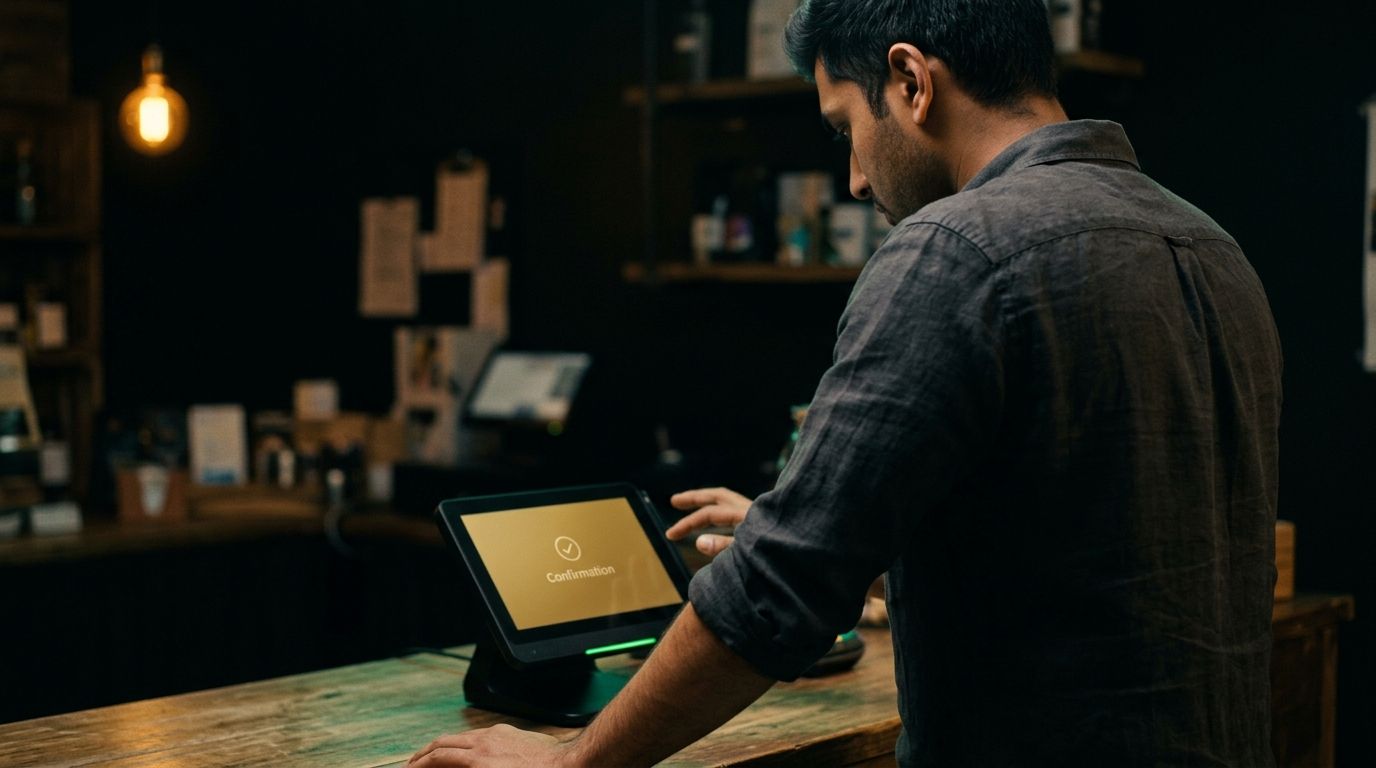
AI Is Rewriting the Rules of Digital Payments — And Your Business Needs to Pay Attention
What does it take to reach one billion daily payment transactions? According to the head of India's National Payments Corporation of India (NPCI), the answer is artificial intelligence applied at every level of the system, from onboarding new users to stopping fraud to extending credit. That answer has direct implications for small and mid-size business owners everywhere, because the infrastructure choices being made right now by the world's largest digital payment networks are setting the template for how AI and money will work together for the next decade.
Dilip Asbe, MD and CEO of NPCI, the organization that oversees India's Unified Payment Interface (UPI), shared his vision at Mumbai Tech Week 2026. UPI already processes over 750 million daily transactions, and Asbe's target is to surpass one billion. To get there, he said AI will be deployed across three specific areas: reaching new users, detecting fraud and financial mules, and providing credit to users and merchants who have existing digital footprints. He also pointed to voice and multilingual AI as the key to simplifying onboarding for the next wave of users, particularly those who are not comfortable navigating text-based interfaces. NPCI launched a voice assistant-based interactive system as early as 2023, though Asbe acknowledged that adoption has been slow and that voice models will need to become more accurate before the technology reaches its full potential.
On the competitive side, Asbe noted that two players, Walmart-owned PhonePe and Google Pay, currently hold over 80% of the UPI market. NPCI has pushed for a 30% market share cap, set to take effect on December 31, 2026, with the aim of driving competition. Asbe's view is that new entrants will invest heavily once a viable commercial model exists within the fintech ecosystem. NPCI also spun off its own BHIM UPI app in 2024 to grow as a sovereign and secure alternative, though its market share sits at roughly 1% today. Perhaps most striking is NPCI's bet on small language models (SLMs) built on India's rich payments data. NPCI already launched a model called FIMI specifically to resolve user payment disputes, and Asbe said it is now serving over one million users to cancel mandates and resolve issues, scaling rapidly.
For small and mid-size business owners in the United States and beyond, this story is not just a global fintech headline. It is a clear signal about where AI is heading in commerce. The same three pillars Asbe described for UPI, which are customer acquisition, fraud protection, and credit access, are the exact same pressure points that small businesses wrestle with every day. AI is no longer a theoretical tool for these problems. The world's largest payment infrastructure is actively building around it, which means the vendors, payment processors, and marketing platforms your business uses are following the same path. The businesses that understand this shift early will be in a far stronger position to adopt new tools before their competitors do.
The point about small language models is particularly relevant for business owners. Asbe's argument is that AI models trained on specific, rich, domain-focused data sets will outperform general-purpose models for high-stakes tasks. FIMI, trained on payments dispute data, already serves over a million users. This same principle applies to your business. A customer service AI trained on your actual product catalog, your real customer questions, and your specific policies will outperform a generic chatbot every time. Businesses that start curating and organizing their data now are building a competitive moat that will compound in value as AI tools become more capable and more accessible.
The voice interface angle is also worth watching. Asbe is candid that voice AI is still early and needs to become more accurate, but NPCI already launched a voice-based payment system in 2023 and is positioning voice as a future critical component. For business owners, this is the right posture: watch, experiment, and be ready to move when the accuracy catches up. Voice search and voice-based customer interactions are already growing in the U.S. market. Getting your digital presence structured in a way that answers spoken questions clearly and completely is not a future project. It is a current one.
This week, take one concrete step toward AI-ready payments and commerce: Review the digital data trail your business is generating from transactions, customer interactions, and support tickets. Identify which of those data sets could be used to train or fine-tune an AI tool for a specific task, whether that is answering customer questions, flagging unusual orders, or qualifying leads. NPCI built FIMI from its payments dispute data and is now serving over a million users with it. Your business data is more valuable than you think. Start treating it that way.
When the architects of billion-transaction payment systems say AI is the engine of their next phase of growth, that is not a trend to note and forget. It is a strategy signal. At Leads to Conversion, we help small and mid-size businesses turn that signal into a real AI-powered growth plan.
Originally inspired by: Indian payments chief thinks AI will be heavily involved in next era of digital payment growth (https://techcrunch.com/2026/06/27/indian-payments-chief-thinks-ai-will-be-heavily-involved-in-next-era-of-digital-payment-growth/) See how Leads to Conversion can help your business grow with AI-powered marketing and payment strategy. Talk to a strategist
Your turn
What is your traffic actually doing?
Send us your details and we will come back with a short, specific read on what your traffic, your pages and your pipeline are doing today — and the first three things we would change. A real person reads every submission, and you get the read whether or not we ever work together.